
Mornings hold a quiet power to reset the day’s rhythm, especially when stress from the night before lingers like a heavy fog. Imagine waking not to a blaring alarm, but to soft natural light filtering through curtains, signaling your body it’s time to ease into balance. Science shows that aligning with circadian cues in the early hours lowers cortisol levels, the stress hormone that spikes with rushed starts, creating a calmer baseline for the hours ahead.
This routine draws from simple, proven habits that stack gently, like breathwork proven to activate the parasympathetic nervous system for relaxation. You’ll find timers for each step, easy recipes for nourishment, and why-they-work notes to build trust in the flow. Together, they form a 20-minute sequence anyone can tweak for their dawn, reclaiming that first light as a grounding ally.
Whether you’re juggling work, family, or just the weight of endless to-dos, these practices invite a softer entry to the day. No overhaul needed—just small, sensory shifts like the warmth of a mug or the rise of your breath. Let’s walk through this together, step by flowing step, to make your mornings a sanctuary of calm.
Awakening with Intention: Soft Light and Breath to Ground the Day
Begin by swapping harsh alarms for a gentle transition to natural light, perhaps using a sunrise-simulating lamp if dawn comes late. Open your eyes slowly, letting room light or window glow ease you awake over 1-2 minutes. This cues your circadian rhythm naturally, reducing the shock that spikes morning cortisol.
Follow with a 2-minute breath timer: the 4-7-8 technique—in for 4 counts, hold 7, out 8. Why it works: it activates the vagus nerve, shifting you from fight-or-flight to rest-and-digest mode right away. Feel the gentle rise of your belly with each inhale, the soft release on exhale, grounding you in the present.
Sensory cues amplify this: notice the warmth of bedsheets against skin, the faint light play on walls. Stay lying down—no rush to sit up. This 5-minute awakening sets a tone of intention, making the rest of your routine feel like a natural extension rather than a chore.
Mind + Body Connection: Linking Awareness Through Gentle Movement
Gentle movement bridges mind and body by syncing breath with motion, releasing overnight tension without strain. Try cat-cow stretches from bed’s edge: on hands and knees, arch your back on inhale (cow), round on exhale (cat), 5 reps over 3 minutes. Why they work: this spinal flow improves circulation, eases muscle stiffness from sleep, and fosters awareness of how thoughts influence physical ease.
Picture flowing from one pose to the next, breath leading the way—inhale opens the chest to light, exhale softens shoulders. If bed-edge feels right, let knees rest there for support. This practice quiets racing thoughts, linking inner calm to outer movement for balanced presence.
Extend with a seated forward fold: legs extended, hinge at hips, hold 30 seconds, breathing deeply. Feel hamstrings lengthen, mind settle. Over time, these links build resilience, turning stress signals into cues for gentle realignment throughout the day.
For deeper integration, consider how this mirrors a mindful morning plan for gratitude practice, where movement primes the body to receive positive anchors.
Your Gentle 20-Minute Sequence: A Flow to Ease into Calm
This core sequence weaves the earlier steps into a seamless 20-minute flow, each with built-in timers and why-they-work insights. Move through at your pace, using a phone timer or mental count for rhythm. It’s designed for accessibility—right from bed to kitchen—building calm layer by layer.
The beauty lies in its stacking: hydration wakes cells, breath steadies nerves, movement circulates vitality, gratitude shifts mindset, nourishment sustains. Adapt as needed, like shortening for busy days. Here’s the flow:
-
Step 1: Hydrate and Anchor (3 minutes) – Warm a cup of water with half a lemon slice; sip slowly while standing by a window. Why it works: rehydration after 8 hours’ sleep flushes toxins gently, lemon’s vitamin C supports adrenal balance, signaling your body to awaken without caffeine jolt. Feel the warmth spread, grounding feet to floor.
-
Step 2: Mindful Breath Hold (4 minutes) – Sit comfortably, do 4-7-8 cycles four times, pausing between to notice breath’s natural rhythm. Why it works: extends parasympathetic activation, lowering heart rate and baseline anxiety for hours. Inhale light, exhale tension—simple yet profound.
-
Step 3: Soft Movement Flow (7 minutes) – Transition to seated twists (right then left, 1 minute each side) and standing yoga sun salutes modified slow (3 rounds). Why it works: boosts blood flow to brain and limbs without cardiovascular strain, syncing body clock for steady energy. Move with breath: twist on exhale, reach on inhale.
-
Step 4: Gratitude Pause (3 minutes) – Journal or voice-note three sensory notes: a sight, sound, warmth you appreciate now. Why it works: rewires neural pathways from stress default to appreciative mode, backed by studies on positive psychology reducing cortisol reactivity. This pause cements the calm built so far.
-
Step 5: Nourish Simply (3 minutes prep) – Prep oatmeal base: ½ cup oats, warm water or milk, cinnamon dash—stir while mindfully present. Why it works: complex carbs stabilize blood sugar, preventing mid-morning crashes that amplify stress. Top later for variety.
Finishing this flow leaves you centered, ready for the day. Notice how each step builds on the last, creating momentum without overwhelm.
Mindful Nourishment: Simple Recipes to Sustain Morning Balance
After the sequence, turn to nourishment as an extension of calm—eat without screens to stay present. A 5-minute overnight oats recipe grounds this: in a jar, mix ½ cup rolled oats, ¾ cup almond milk, 1 tsp chia seeds, sliced banana, and a sprinkle of nuts. Let sit overnight; warm gently in morning for cozy texture.
Why it works: fiber from oats and chia slows digestion for steady glucose release, stabilizing mood and focus. The warmth mimics comforting sunlight, enhancing sensory satisfaction. Variations like berries add natural sweetness without sugar spikes.
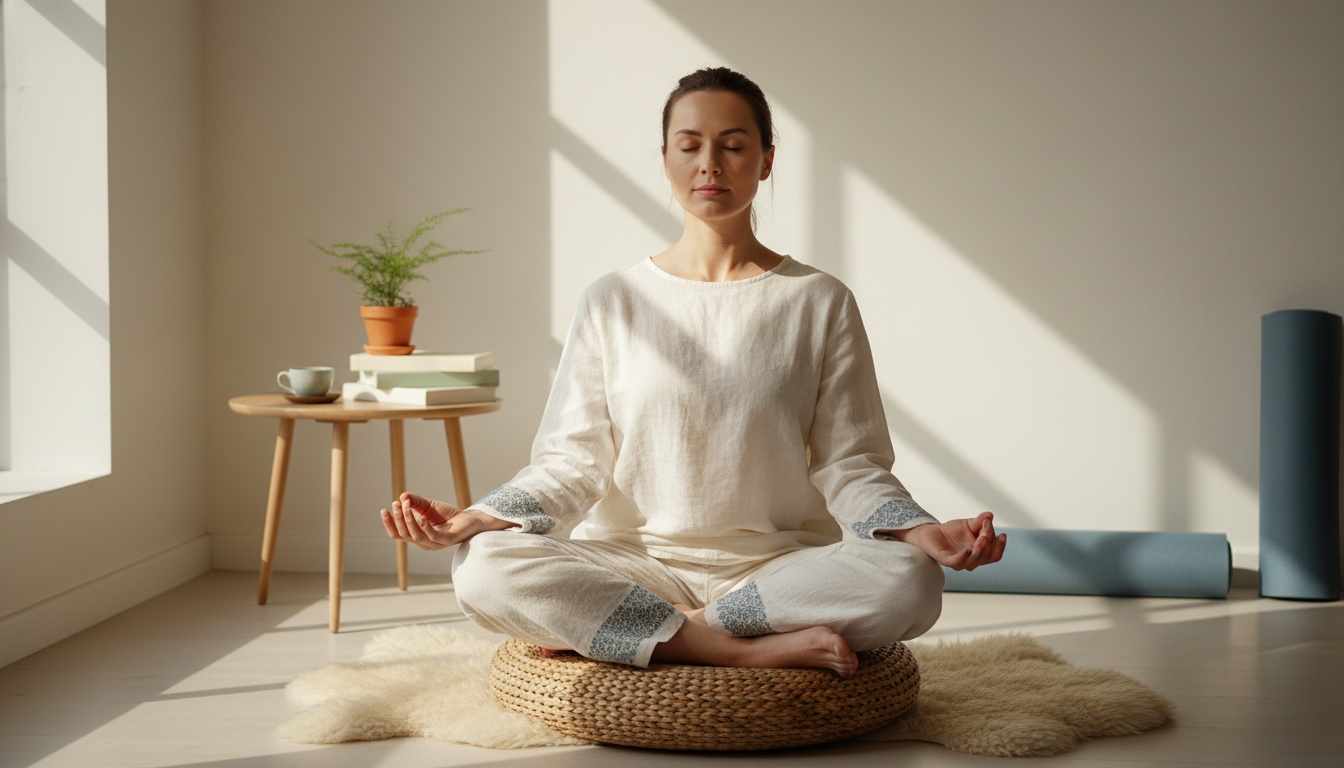
Pair with herbal tea—chamomile or ginger—for added digestion ease. Sit by light, chew slowly, noting flavors. This ritual sustains the routine’s balance into your hours ahead.
Building on habits like those in 10 morning habits that support daily wellness amplifies these nourishing tweaks seamlessly.
Aligning Your Daily Rhythm: Morning as Foundation for Midday and Evening Unwind
Your morning routine lays the groundwork for a full-day rhythm, where calm cascades naturally. Midday, extend with a 5-minute walk—feel ground underfoot, breath deepen—to maintain circulation from earlier flows.
Evening mirrors this: dim lights post-dinner, echoing morning’s soft awakening, to signal unwind. Why it works: consistent cues reinforce circadian health, lowering overall stress load. Transitions like a post-lunch stretch keep the thread alive.
A clutter-free start, as explored in an easy tips for a clutter-free morning start, ensures this rhythm flows without visual chaos interrupting.
Over days, mornings become the anchor, midday the steady pulse, evening the gentle close—holistic balance in motion.
Keep It Simple: Reducing Overwhelm for Lasting Morning Habits
Overwhelm kills routines, so start with one step—like breath or hydration—for 5 minutes max. Scale up weekly as it feels natural, not forced. This micro-habit approach builds neural grooves for longevity.
Busy days? Shrink to bed-breath-gratitude: under 10 minutes, still potent. Track in a note: what felt good? Adjust warmly.
Pick one moment today to practice—perhaps tomorrow’s dawn. Let simplicity be your guide to sustained calm.
Frequently Asked Questions
Can a short morning routine really lower stress all day?
Yes, research on cortisol regulation shows even 10 minutes of intentional practices like breath and light exposure builds resilience, creating a buffer against daily pressures. Start small to experience the shift yourself—consistency reveals the compounding calm over time.
What if I’m not a morning person?
Focus first on light exposure and breath, which gently nudge your internal clock without willpower battles. These low-effort entry points often spark a natural rhythm shift within days, easing resistance softly.
Do I need special equipment?
No, everything uses what’s at hand—your bed for movement, window for light, basic kitchen items for hydration and oats. This accessibility makes calm available anywhere, anytime.
How soon will I notice less stress?
Many report feeling steadier by the end of week one, with deeper changes around 21 days as habits embed. Track subtle cues like easier focus or lighter mood to affirm progress.
Is this routine safe for everyone?
These low-impact moves suit most, but consult a doctor if you have injuries or conditions. Always listen to your body, modifying as warmth and ease guide you.